Tuesday, December 05, 2017

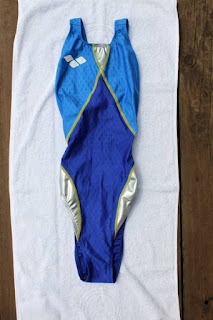
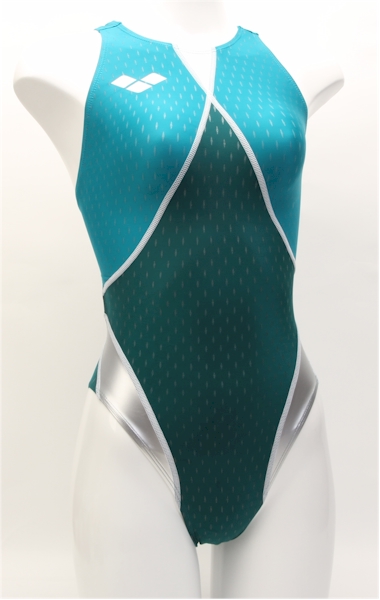
#BringBackTitanTaft: Available products

Titan 22's Taft Avenue Branch will re-open soon if the MoA (memorandum of agreement) will sign and also featuring:
  • 2011 Nike La Salle Tee (green and white)
  • 2013-2017 Nike La Salle apparel

Swimwear such as:
  • arena aile-bleue
    • arn-6000w
    • ARN-6001W
    • ARN-6002W
    • ARN-6003W
    • ARN-6004W
    • ARN-6005M
    • ARN-6006M
    • ARN-6007M
    • ARN-6008M
    • ARN-6009M


    • arena nux-F
      • ARN-6011W
      • ARN-6012W
      • ARN-6013
      • ARN-6014
      • ARN-6015
    • Speedo Fastskin FS-PRO
      • Women's Recordbreaker Costume


    Also available: Recordbreaker Costume and Legskin (UK version)



    • speedo FASTSKIN LZR RACER High-Tech Suit (UK Version)
    • speedo FASTSKIN LZR RACER ELITE (UK Version) 
    • speedo FASTSKIN LZR RACER ELITE 2 (UK Version) 
    • speedo FASTSKIN LZR RACER PRO (UK Version) 
    • speedo FASTSKIN LZR RACER X (UK Version) 
    • speedo FASTSKIN3 (UK Version) 

    Monday, December 04, 2017

    Continuing transport woes

    Let’s keep our fingers crossed.

    This is the appropriate response to the statement of Department of Transportation (DOTr) Assistant Secretary for Railways John Batan in a recent forum that the administration aims to complete more than 320 kilometers of railway projects in Luzon and Mindanao by 2022.

    Once completed, the country’s existing railway network, which once operated from Manila to La Union province in the north and Legazpi City in the Bicol region, will quadruple.

    The projects also include the extension of the present Light Rail Transit (LRT) and Metro Rail Transit (MRT) systems to areas adjacent to Metro Manila. These are currently being undertaken by private companies.

    According to Batan, the projects would cost around P1 trillion, which represents a big chunk of the P8 trillion that the administration is allocating for its “Build, Build, Build” program.

    The DOTr’s announcement has a familiar ring to it. Except for some additions, the projects conform to the infrastructure program that then President Benigno Aquino III promised to initiate and complete during his term.

    But unlike the Aquino administration’s reliance on public private partnership (PPP) arrangements to accomplish its infrastructure objectives, President Duterte wants the government to play a major role in this undertaking to avoid a repeat of the legal controversies that marked (and delayed) the completion of several PPP-based projects.

    No doubt, the infrastructure projects promised by the Duterte administration are superb, at least on paper. They’re long overdue. The country’s mass transportation system is in the pits. Every administration that came to power since the end of the Marcos dictatorship in 1986 promised to solve this problem.

    If work on the P1 trillionworth of railway projects proceeds without any hitches, the public can look forward to efficient transportation systems in the country’s major cities and provinces by the end of President Duterte’s term.

    There is nothing wrong with DOTr making public its infrastructure projects, but it should not go overboard with the publicity hype. Raising false hopes about forthcoming improved transportation systems may result in deep frustration by the public in case the projects fail to take off or are inordinately delayed.

    It will be recalled that the Aquino administration was gung ho when its officials announced its infrastructure projects. The PPP projects received a lot of media publicity.

    Unfortunately, when the Aquino administration exited in 2016, the only project that can be credited to it from start to finish was the 4-kilometer long Muntinlupa-Cavite Expressway. The rest were either pending public bidding, subject of litigation, or still undergoing construction.

    The Duterte administration does not have the luxury of time to complete the promised infrastructure projects. It has approximately four years and six months left in its term.

    Time moves so fast that before we know it 2022 is here. And if we factor in the public works ban before the 2018 local elections, the timeframe for those projects is even shorter.

    So much for the future, but what about the present? MRT and LRT continue to be plagued by operational problems that have seen coaches stopping in the middle of the tracks and passengers forced to get off and walk along the rails to get to the nearest station.

    Hardly a day passes without either the MRT or LRT suffering glitches that are traceable to mismanagement, poor maintenance and technical inefficiency.

    For lack of a suitable alternative, the public continues to bear with the troubles and inconveniences of the MRT and LRT. In other countries, the same deplorable conditions would have resulted in violent protests and the resignation of top officials.

    It is a tribute to the Filipino’s innate sense of patience that something similar has not yet happened here. The administration, however, should not delude itself into believing that this virtue is limitless because the consequences of inaction can be serious.


    Read more: http://business.inquirer.net/241920/continuing-transport-woes#ixzz50vZJM5hc
    Follow us: @inquirerdotnet on Twitter | inquirerdotnet on Facebook

    Sunday, December 03, 2017

    DOTr signs deals for LRT-1, PNR extension projects

    The Department of Transportation (DOTr) inked an agreement with Mitsubishi Corporation Friday for the procurement of new light rail vehicles (LRVs) for the Light Rail Transit-Line 1 (LRT-1).

    DOTr Secretary Arthur Tugade and Mitsubishi Corp. Senior Vice President Tetsuji Nakagawa signed the deal for the acquisition of 120 new LRVs for the rail line’s 12-kilometer extension from Baclaran to Bacoor, Cavite.

    The LRVs are designed with four LRV configuration. Each train set would have a minimum of 1,388 passengers and are energy efficient and have low maintenance cost.

    Tugade ensured the smooth implementation of the LRT-1 South Extension Project.

    “It is a beautiful day because we are putting life to a project that has been delayed for a long time. No way will I delay any further. No way will I procrastinate. It is high time to put this project in high motion,” said Tugade.

    The first four LRVs are set to be delivered on August 31, 2020 while some 40 LRVs are expected to come on December 31, 2020.

    Mitsubishi Corp. Construcciones y Auxiliar de Ferrocarile, the project subcontractor which is based in Spain, is expected to complete the delivery of 120 LRVs on December 31, 2021.
    The LRT-1 Cavite Extension will start its construction next year and is poised to be completed within the term of President Rodrigo Duterte.

    The procurement contract was witnessed by Ambassador of Spain Luis Calvo Castrano, representatives from the Embassy of Japan, Japan International Cooperation Agency (JICA), Light Rail Manila Corporation (LRMC) and high-ranking officials of the department.

    Meanwhile, the Philippine National Railways (PNR) also signed a contract with NSTren Consortium for the construction of the Manila-Clark Railway system.

    NSTren Consortium, the project’s construction supervision consultant, will handle the construction of the Tutuban-Malolos segment of the 106-kilometer rail system that will connect Manila and New Clark City, which is slated to begin December to January 2018.

    The Tutuban-Malolos segment is targeted to be partially operational by 2020 and fully completed by 2021, while construction of the Malolos-New Clark City segment is seen to finish by 2022.

    Also known as the North-South Commuter Railway Project, the Tutuban-Malolos segment was approved by the National Economic Development Authority (NEDA) Board in February 2015 with signing of the Japanese Official Development Assistance (ODA) loan in November 2015.

    “The two contracts signed will not only pave the way for the delivery of railway infrastructure that will carry more than 1 million passengers per day by 2021, these contracts and the bidding processes that led to it has also saved the Filipino taxpayers close to PHP 5 billion,” said DOTr Assistant Secretary for Railways Timothy John Batan.

    Quote from Stephen Espiritu #NikeLaSalleTee

    "Time to suit up." #AN1MO

    https://twitter.com/TIPENitelymaybe/status/353750131344019456

    Thursday, November 30, 2017

    DOTr eyes return of Sumitomo Corporation as MRT-3 maintenance provider

    The maintenance and rehabilitation work is expected to begin before the year ends.

    There is huge chance that the Department of Transportation (DOTr) might bring back Sumitomo Corporation and its technical partner Mitsubishi heavy industries in the maintenance and rehabilitation of the Metro Rail Transit or MRT-3.

    This has been the statement of the Department of Transportation or DOTr, Wednesday. It also assures the public that the government is doing its best to improve the services of MRT.

    According to DOTr Assistant Secretary for Rails Timothy John Batan, Sumitomo Corporation is the first company being considered by the Transportation Department as the maintenance provider of the rail system.

    “That’s part of the options the Department of Transportation is looking into. Because you know, that joint venture is the one that designed and built the MRT-3 in 1998 until 2000 and they are ones maintaining the MRT since 2000 until 2012,” Batan said.

    The DOTr targets to get the services of the said company through government to government agreement and not by bidding.

    Philippine Transport officials are currently coordinating with the Japanese Government regarding the matter. The agreement is expected to be signed before the year ends.

    “The G2G agreement will pave way for the Official Development Assistance or ODA that can be used by the DOTr to look for a maintenance service provider.

    The DOTr said the contract would also contain the rehabilitation of MRT so the trains could return to its original performance.

    However, the Transportation Department has yet to determine the amount it will pay Sumitomo for its services.

    Sumitomo was the maintenance provider of MRT in the first 12 years of its operation.

    It was also the company that designed the MRT.

    Meanwhile, the National Bureau of Investigation conducted another inspection earlier at the depot of MRT.

    The inspection is in connection with the NBI’s investigation on the decoupling of coaches last November 16.

    In the said inspection, MRT engineers showed NBI the system of attachment of trains. – Joan Nano | UNTV News & Rescue

    https://www.untvweb.com/news/dotr-eyes-return-of-sumitomo-corporation-as-mrt-3-maintenance-provider/

    DOTr announces 4-point strategy to improve MRT service

    The Department of Transportation (DOTr) on Wednesday has announced a four-point strategy of “taking bold and strategic steps” to improve the services and to solve the problems troubling the Metro Rail Transit 3.

    “A Four-Point Strategy is already being implemented, which involves: promoting accountability (termination of BURI); ensuring continued service delivery (establishment of the Maintenance Transition Team); contracting a qualified maintenance and rehabilitation service provider (Sumitomo-Mitsubishi Heavy); putting in place a long-term, single-point-of-responsibility, operator and maintenance provider for MRT-3 (O&M Unsolicited Proposal),” DOTr said in a statement.

    Promoting Accountability

    Among these steps was to ‘promote accountability’ by the termination of the contract with BURI on November 6 due to its failure  to meet the performance indicators in the contract, to procure spare parts, to overhaul MRT-3’s train cars, as only 2 out of 43 train cars have been overhauled by BURI.

    “These failures led to the many passenger unloading and train removal incidents during the 22 months that BURI was maintaining MRT-3…BURI’s termination is intended to promote accountability, and to ensure that taxpayers’ money (P54 million a month for maintenance and P907 million for the overhaul) is not spent on a non-performing service provider,” it added.

    Continued Service Delivery

    After the termination of the BURI contract, the DOTr has created a Maintenance Transition Team (MTT) that would maintain the system for 3-6 months while procuring a new and qualified maintenance service provider.

    The MTT has also hired 450 former BURI employees. Meanwhile, LRTA and PNR also shared “highly qualified and experienced” railway engineers to the MTT.

    “The condition of MRT-3’s spare parts inventory at take over further demonstrated BURI’s failure to purchase and maintain a sufficient level of spare parts. To address this, the DOTr created a special Bids and Award Committee (BAC), which, together with the MTT, is regularly convening to expeditiously procure the spare parts that BURI failed to purchase,” DOTr said.

    Maintenance and Rehabilitation Service Provider

    The department is also discussing with Japan for the possible return of Sumitomo Corporation and its technical partner Mitsubishi Heavy Industries as maintenance service provider of the MRT-3.

    “A G2G (Government to government) agreement is scheduled to be signed before year-end…Sumitomo and Mitsubishi Heavy designed, built, and maintained the MRT-3 in its first 12 years of operations,” DOTr said.

    “The maintenance and rehabilitation contract is intended to have a term of 3 years, and will include the rehabilitation and restoration of the system to its original performance standards,” it added.

    Long-Term, Single-Point-of-Responsibility, O&M Provider

    The DOTr also said that the problems of MRT resulted from short-term and fragmented maintenance contracts and from “finger-pointing” due to having different entities maintaining and operating MRT-3.

    To address this, the department pursued an Unsolicited Proposal for the 30-year operation and maintenance (O&M) of MRT-3

    The DOTr also said they are already coordinating with the LTFRB and MMDA to expand the P2p bus fleet that will complement the MRT-3.

    “Also, an independent safety audit by an ISO-certified and IFIA member certifier (International Federation of Inspection Agencies) will commence soon for the entire MRT-3 system, which is intended to give DOTr additional inputs on the interventions needed to rehabilitate and restore the system’s reliability,” DOTr said.

    “With the bump in ridership expected as we approach the holidays, the public can be assured that the DOTr is pursuing all avenues to restore the MRT-3’s reliability and to continue ensuring the safety of its 500,000 daily riders,” it said.

    Japan aid eyed in MRT 3 rehab

    The Department of Transportation (DOTr) wants to bring back the Japanese group involved in the Metro Rail Transit Line 3 (MRT 3) construction and design 18 years ago in a bid to resolve breakdowns that disrupt the journey of thousands of commuters on a near-daily basis.

    The DOTr said yesterday it was holding high-level talks with the Japanese government for Sumitomo Corp. and its technical partner, Mitsubishi Heavy Industries, to maintain and rehabilitate the MRT 3 via an indicative three-year agreement—backed by a fresh loan from Japan.

    It hopes to sign the agreement before the end of 2017.

    Sumitomo-Mitsubishi maintained the MRT 3 for its first 12 years of operations. The agreement was not renewed in 2012 under the Aquino administration when the 17-kilometer MRT 3, which traverses the crucial Edsa highway, was already showing signs of strain.

    Aquino-era officials said the tandem had imposed conditions they could not accept, including increasing the monthly maintenance fee to $2.2 million from $1.4 million while cutting back on certain responsibilities covering fare collection and the MRT 3 signaling system. Local companies were hired instead but the problems at the MRT 3 did not abate.

    The DOTr’s announcement yesterday came less than a month since it formally terminated the contract of previous maintenance provider Busan Universal Rail halfway through its three-year agreement due to continued glitches and for not meeting certain obligations.

    The new direction with Sumitomo also casts the spotlight on the MRT3 rehabilitation, maintenance and operations offer of Ayala Corp. and Metro Pacific Investments Corp., which was already granted original proponent status. It likewise reflects the Duterte administration’s general skepticism on the private sector funding big infrastructure projects.

    “The joint venture of Sumitomo and Mitsubishi Heavy Industries is being closely considered due to its background and experience with the MRT 3,” the DOTr said in a statement.

    The DOTr did not detail the target loan amount under the Japanese overseas development assistance (ODA) component. The department said the intention was for Sumitomo-Mitsubishi to “rehabilitate and restore the system to its original performance condition.”

    “Due to under-investment in preventive maintenance and renewal works in recent years, the condition of MRT 3 has degraded to a state where maintenance works alone are no longer sufficient,” the DOTr said.

    The department also clarified that these were direct talks with Japanese counterparts and that businessman Robert Sobrepeña was not involved. Sobrepeña, part of the group with private interests in the MRT 3, said last May that Sumitomo offered to rehabilitate the MRT 3 for $150 million (P7.5 billion).

    https://business.inquirer.net/241699/japan-aid-eyed-mrt-3-rehab

    Wednesday, November 29, 2017

    MOVING FORWARD: BOLD AND STRATEGIC STEPS BEING TAKEN TO IMPROVE THE MRT-3

    The Department of Transportation (DOTr) is taking bold and strategic steps to solve the problems that have been plaguing the MRT-3 for years.

    A Four-Point Strategy is already being implemented, which involves:

    - promoting accountability (termination of BURI);
    - ensuring continued service delivery (establishment of the Maintenance Transition Team);
    - contracting a qualified maintenance and rehabilitation service provider (Sumitomo-Mitsubishi Heavy); 
    - putting in place a long-term, single-point-of-responsibility, operator and maintenance provider for MRT-3 (O&M Unsolicited Proposal).

    Point 1: Promoting Accountability

    Last Nov. 6, DOTr terminated BURI’s maintenance service contract due to, among others, BURI’s non-performance of its obligations under the contract.

    BURI failed to perform its maintenance obligations, both due to its inability to meet the performance indicators in the contract (e.g. number of trains running) and its failure to procure spare parts.

    BURI also failed to perform its obligation to overhaul MRT-3’s train cars, pursuant to a schedule that was proposed by BURI itself. As of 21 November 2017, only 2 out of 43 train cars have been overhauled by BURI.

    These failures led to the many passenger unloading and train removal incidents during the 22 months that BURI was maintaining MRT-3.

    BURI’s termination is intended to promote accountability, and to ensure that taxpayers’ money (PhP54 million a month for maintenance and PhP907 million for the overhaul) is not spent on a non-performing service provider.

    Point 2: Continued Service Delivery

    The DOTr prepared for the take over of the maintenance of MRT-3 by creating a Maintenance Transition Team (MTT), which will maintain the system for 3-6 months while procuring a new and qualified maintenance service provider.

    The MTT ensured that it has the necessary human resources, by directly hiring more than 450 former BURI employees. After months of delayed and partial salaries, the MTT has paid the direct hires their salaries in full and on time, which has boosted their morale.

    The LRTA and PNR have also thrown in their support to the MTT, by sharing highly qualified and experienced railway engineers to the MTT.

    The condition of MRT-3’s spare parts inventory at take over further demonstrated BURI’s failure to purchase and maintain a sufficient level of spare parts. To address this, the DOTr created a special Bids and Award Committee (BAC), which, together with the MTT, is regularly convening to expeditiously procure the spare parts that BURI failed to purchase.

    Point 3: Maintenance and Rehabilitation Service Provider

    High-level discussions with the Government of Japan are ongoing to pave the way for DOTr’s direct engagement of Sumitomo Corporation and its technical partner Mitsubishi Heavy Industries, under a Government to Government (G2G) Official Development Assistance (ODA) platform. A G2G agreement is scheduled to be signed before year-end.

    Sumitomo and Mitsubishi Heavy designed, built, and maintained the MRT-3 in its first 12 years of operations.

    The maintenance and rehabilitation contract is intended to have a term of 3 years, and will include the rehabilitation and restoration of the system to its original performance standards.

    Point 4: Long-Term, Single-Point-of-Responsibility, O&M Provider

    Many of MRT-3’s problems in recent years resulted from successive short-term and fragmented maintenance contracts, and from finger-pointing due to having different entities maintaining and operating MRT-3.

    DOTr is addressing this by pursuing an Unsolicited Proposal for the 30-year operation and maintenance (O&M) of MRT-3. Original proponent status has been given to the proponent, Metro Pacific Light Rail Corporation (MPLRC), and the proposal will soon be endorsed to NEDA for further evaluation.

    Other Efforts

    The DOTr is already coordinating with the LTFRB and MMDA in expanding the P2P bus fleet that will complement the MRT-3.

    Also, an independent safety audit by an ISO-certified and IFIA member certifier (International Federation of Inspection Agencies) will commence soon for the entire MRT-3 system, which is intended to give DOTr additional inputs on the interventions needed to rehabilitate and restore the system’s reliability.

    With the bump in ridership expected as we approach the holidays, the public can be assured that the DOTr is pursuing all avenues to restore the MRT-3’s reliability and to continue ensuring the safety of its 500,000 daily riders.